


Jobs for Nature initiative transforms Maitai ecosystem
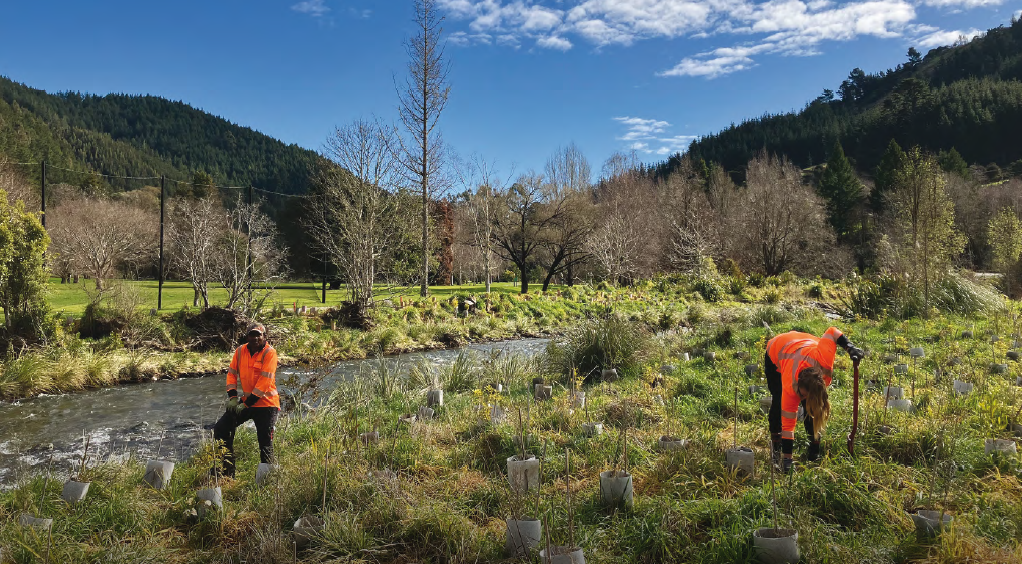
Jobs for Nature initiative transforms Maitai/Mahitahi Valley ecosystem
A remarkable five-year journey of ecosystem restoration in the Maitai/Mahitahi Valley has reached a major milestone, as the Jobs for Nature-funded Project Mahitahi demonstrates the power of collaborative conservation.
Thanks to $1.7 million in funding from the Ministry for the Environment, $2 million from the Department of Conservation, tree funding from Tu Uru Rākau (NZ Forest Service) and Trees That Count, and support from Nelson City Council, the project has achieved remarkable results:
- 40 hectares of weed control, significantly reducing the seed source and overall weed burden
- 150,000 native plants planted across 19 hectares
- 128 hectares of pest animal control, with over 3,300 predators trapped
- Extensive crack willow control covering more than 17 kilometres of riverbanks along the Maitai River and Brook Stream.
As part of the Government's Covid-19 recovery package, Jobs for Nature was designed to create meaningful employment while achieving significant environmental benefits and Project Mahitahi has delivered on both fronts.
The project's vision has been to restore the mauri (life force) of the Maitai/Mahitahi Valley, ki uta ki tai (from mountain to sea), ensuring native plants and wildlife can thrive within a healthy and connected ecosystem, while inspiring communities to nurture and value the Mahitahi as a taonga for past, present, and future generations.
The Jobs for Nature funding enabled a genuine step change in conservation action, transforming dense weed infestations into thriving pockets of native vegetation along the length of the Maitai. These restored areas will provide vital food and habitat for native species that face ongoing threats from predator pests and competition from introduced species.
Tauawhi Taiao for Ngāti Koata Pene Gieger says Project Mahitahi has been a true collaborative effort, spanning Council and Ngāti Koata whenua, with a valuable partnership with iwi proving instrumental to the project's success.
“Project Mahitahi has brought together people from all walks of life and mahi with a shared purpose. It showed what we can achieve for our people and the whenua we care for.
“For me, the Jobs for Nature programme was exactly the right kind of response to the pandemic – Project Mahitahi provided employment opportunities and was a reason for people to get out and reconnect. It allowed Ngāti Koata to build its own Taiao team, and involve iwi, whānau and hāpu of all ages in native planting restoration”
Volunteers and landowners have actively supported the project through their own native planting and weed control efforts.
"We're incredibly grateful to everyone who contributed to this important mahi over the years. Hundreds of volunteers and students who have joined contractors carrying out planting, mulching, art and activities," says Project Manager – Ecological Restoration Marian McCay.
The initiative created valuable employment opportunities, upskilling many new conservation staff in the region.
"Project Mahitahi has been one of the most rewarding experiences of my career," says Rod Alexander from Kūmānu Environmental.
"While the scale was sometimes daunting, I'm immensely proud of both the physical achievements and how the project gave so many people the chance to learn about conservation. Our staff tackled everything from controlling massive pest plant infestations to establishing trap networks across hundreds of hectares, and even assisted during Nelson's worst flooding in August 2022. Many joined us with little conservation experience but gained skills in pest plant control, native planting, trapping, GIS mapping, and machinery use. The Maitai has always been special to my family, but now every corner of the valley holds meaningful memories."
While this phase of Project Mahitahi concludes, the mahi continues with Council maintaining the gains made over the project.
Those interested in volunteering can get involved through groups like Friends of the Maitai or support trapping initiatives including Birdlife Centre of New Zealand and Birdlife Codgers.
For more information, contact Nelson City Council Biodiversity team at nelson.nature@ncc.govt.nz
