


The secret life of Corder Park
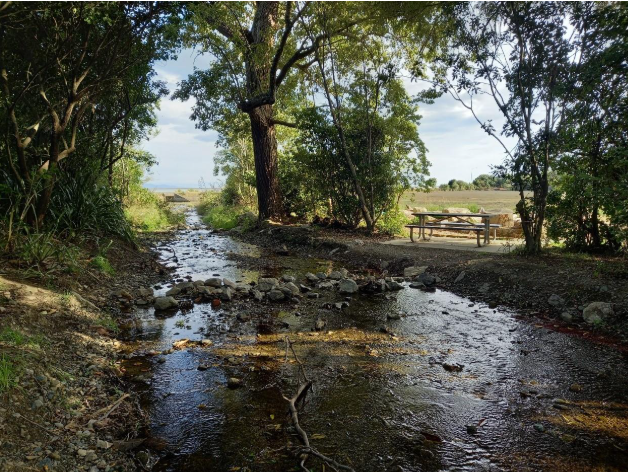
At first glance, Corder Park might not win any beauty contests. The reeds sway untidily in the breeze, mud glistens at low tide, and it can look, well, a bit swampy.
But beneath this unmanicured appearance lays one of Nelson's hardest-working landscapes.
Nelson City Council Catchments Advisor Sarah Allen says, “People often expect parks to look neat and tidy, but wetlands are meant to be a little wild. That's how they do their job.”
And what a job it is. Corder Park's intertidal wetland – essentially a salt marsh – serves as a crucial meeting point between freshwater and sea. This unique transition zone provides habitat for longfin eels gliding through the shallows, pied stilts picking their way across the mudflats, and countless insects humming through the rushes.
This makes Corder Park especially precious: more than 98% of the Haven's natural salt marsh has already been lost. What remains is irreplaceable.
The wetland's work extends far beyond providing a home for wildlife. Like a massive natural sponge, it absorbs stormwater during heavy rainfall, reducing flooding in surrounding areas. Its plants and sediments filter pollutants and trap sediment before they can reach Tasman Bay.
“It's a nature-based solution right in our urban environment. In an era of climate change and more intense weather events, these wetlands are increasingly valuable,” Sarah says.
Council has an environmental restoration plan in place for the Corder Park area, recognising its ecological significance. So next time you pass by and notice its slightly dishevelled appearance, remember you're looking at a thriving ecosystem hard at work, protecting both wildlife and community.
