


Brown trees, healthy future: Wilding pine control
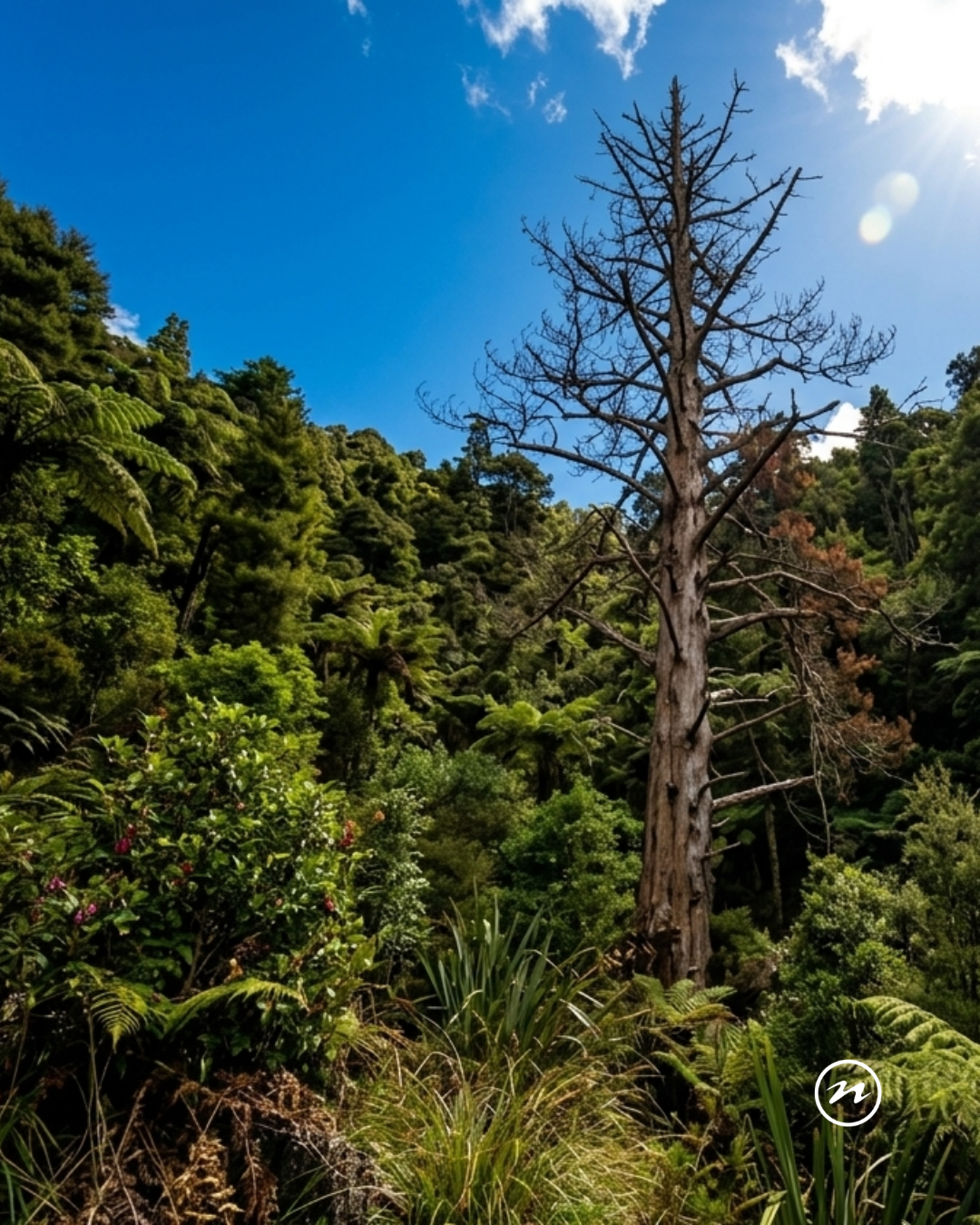
If you have noticed brown or dead-looking pine trees on the hills above Nelson, you are not imagining it. Here is what is happening and why.
You might look up at the hills around Nelson and notice patches of brown or grey where the pines used to be green. It can look unsettling, like something has gone wrong. But what you are seeing is work going to plan.
Council, along with regional and national partners, is carrying out planned wilding pine control across the hill country surrounding the city. Wilding pines are pines and other conifers that have spread beyond their original planting sites into surrounding land. Without control, they move steadily into native forests, open hillsides (such as the ecologically significant Dun Mountain), and water catchments by crowding out native species and altering how the landscape holds water.
What you are seeing on the hillside is the work going to plan.
Why do the hills look brown?
Different control methods work by causing the pines to die back naturally over time. This means treated trees often stay standing while they die, which is why hillsides can look patchy or brown for weeks or even months after treatment.
Over time, as the treated pines die and break down, native plants will have more space and light to establish and spread. The hills will look different for a while, but the long-term picture is a healthier, more diverse landscape.
Why are some dead trees left standing?
In some areas, you may notice dead pines that remain standing rather than being removed. This is deliberate. Felling and removing trees in steep or remote terrain is not always practical or safe to do immediately, and the priority is to stop the trees from seeding and spreading further. These areas will be underplanted with native species trees, which helps with retaining slope stability. In areas where there is high recreational use, specific treated trees may be completely removed by arborists.
Is it long-term work?
Wilding pine control takes time. Pine seeds already in the ground will produce new seedlings over the coming years, so the programme requires follow-up visits to treat regrowth.
The work is being carried out as part of a coordinated programme involving Nelson City Council, the Department of Conservation, and other regional and national partners. It is part of a wider national effort to get on top of wilding pine spread before it becomes irreversible in our hill country.
Spotted something?
If you see new wilding pine seedlings in the Nelson area, you can report them via the Antenno app. Reports help the team plan follow-up work.

