


The quiet army protecting our backyard
Something shifted over in Kaiteriteri a few weeks ago.
Eighty people walked into a room as strangers: volunteers, scientists, landowners, and community group members from right across Te Tauihu. A regional trapping hui that was, on paper, about pest control techniques turned into something far more powerful: proof that Nelson and Tasman's conservation community is alive, growing, and ready for more hands.
Imagine walking the Maitai track on an ordinary Tuesday morning and hearing a korimako/bellbird call from the canopy. Watching piwakawaka/fantails dart through your garden not as a rare treat, but as an everyday thing. Knowing that the bush behind your kid's school is genuinely recovering because of what people in your community are doing now.
Darren Peters, who has watched trapping evolve from gutfeel to science-backed practice over many years, reminded the room that the most effective programmes stay adaptable.
Dr Graeme Elliott brought research straight from the field, sharing what careful monitoring of banded rail along our coastline is telling us about how best we can protect this threatened species.
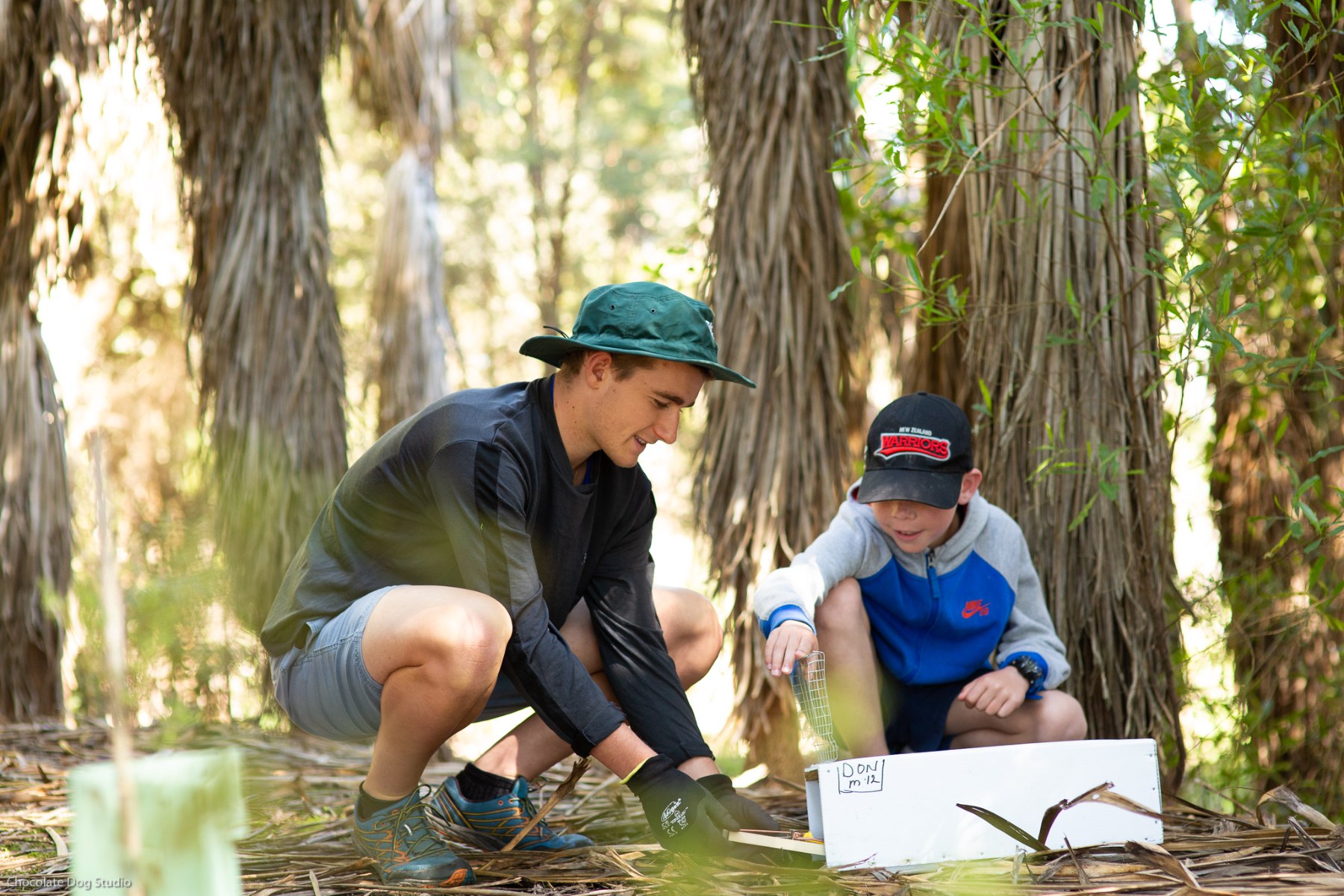
Between presentations, people compared notes. The programme featured a mix of presentations and hands-on workshops, covering topics such as pest animal behaviour, effective trapping techniques, monitoring methods and the use of tools like Trap.NZ.
Emerging technologies for large-scale and remote projects were also explored alongside practical insights participants could take back to their own programmes.
The hui also covered the challenges. Keeping volunteers energised over the long haul is genuinely difficult. Younger people aren't always finding their way in. Some landowners remain hard to reach, funding is a challenge, and the information that proves conservation outcomes isn't always being collected consistently enough to tell the full story.
And yet, what stood out most strongly was that no one needs to tackle these challenges alone.
The hui underscored something simple but powerful: conservation in our region is driven by connection. People left not just with new knowledge, but with new relationships.
Sharing ideas, comparing approaches, and seeing what others are achieving reinforced the value of working collectively and the strength of the volunteer network behind much of this work.
As one participant reflected, “I was really inspired by the passion and creativity people bring to this work, everyone is genuinely doing their best to help our native ecosystems thrive.”
The hui was made possible by Te Tauihu Environment Trust (TET), with support from Predator Free NZ, DOC, NCC and TDC. To learn more about trapping in our region, contact nelson.nature@ncc.govt.nz or sign up to TET’s newsletter via their website.
