


Stronger westerlies this summer — what boaties need to know
Stronger westerlies this summer — what boaties need to know
By Stu Whitehouse, Nelson Harbourmaster
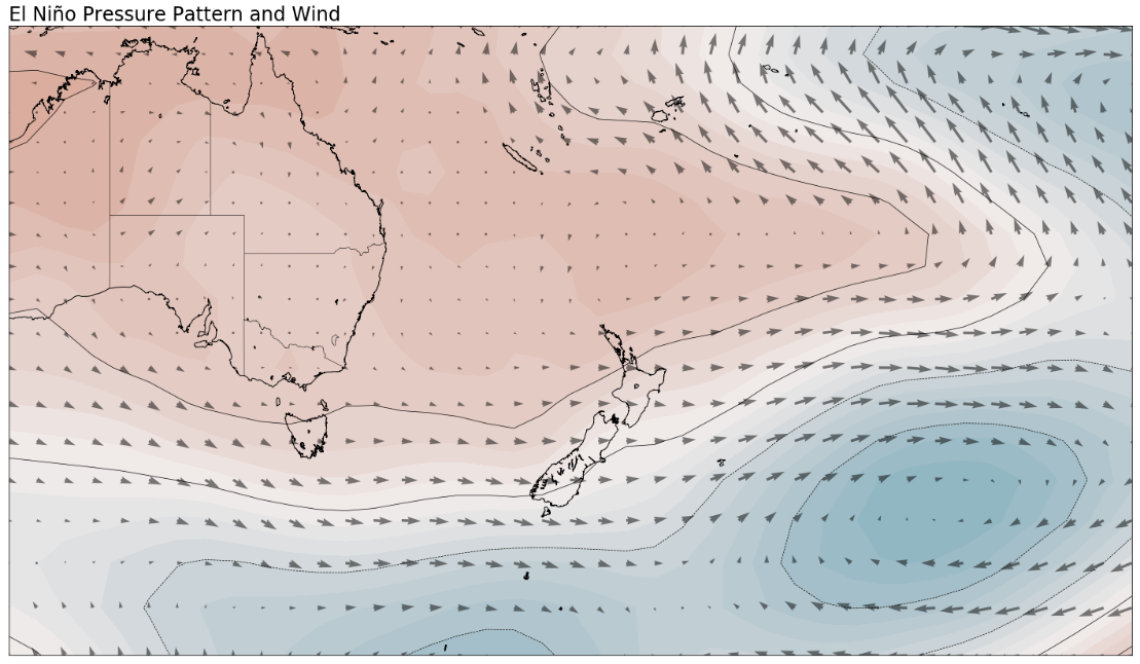
If you've been out on Tasman Bay/Te Tai-o-Aorere lately, you've probably noticed the westerlies have had a bit more bite to them. You're not imagining it. Our Harbourmaster team has been tracking a rise in westerly wind events over the past few months, and it's part of a bigger pattern playing out across the Pacific. This is particularly important for people planning to head out in smaller boats and paddle craft as we enter spring and summer. For those wind sport enthusiasts (myself included) wetsuits are getting dusted off.
Why are the westerlies likely to be more frequent?
The short answer is El Niño.
El Niño is a natural climate pattern that starts thousands of kilometres away, in the tropical Pacific. Normally, trade winds push warm surface water westward, so it piles up around Indonesia and northern Australia. Sea levels there sit around 60 centimetres higher than off the coast of South America.
When those trade winds weaken, that built-up warm water surges back east across the Pacific. It takes two to three months to cross the ocean, and as it moves, it shifts rainfall and storm patterns and changes weather far beyond the tropics, including here in Aotearoa.
For Nelson, one of the flow-on effects is more frequent and sometimes stronger westerly winds, particularly into spring and over summer.
What does this mean if you're heading out on the water?
Westerlies can turn Tasman Bay from calm to choppy faster than many boaties expect, especially as the wind funnels down from the Whakamarama or through the Buller Gorge and accross the Waimea plains. A trip that looks easy going out can be a hard, wet slog coming back in. If that combines with wind against tide conditions, then Nelson harbour entrance (the cut) and the inner harbour can become hazardous for small craft.
“We’ve seen boaties caught out by wind that builds quickly through the late morning and early afternoon, especially a south-westerly, often stronger than forecast due to local effects Check the forecast before you leave and check it again before you head home. Plan accordingly and if in doubt, don’t go out!”
— Nelson Harbourmaster Stu Whitehouse
What should you check before heading out?
A few simple checks can make the difference between a good day on the water and a call for help.
- Check the marine forecast, not just the general forecast, before you launch and again before you head back in. When a south-westerly is forecast, exercise caution if heading along the coast from Nelson. Watch for cloud building over the Kahurangi Range. It's a local indicator that winds may soon strengthen significantly.
- Ensure your boat is seaworthy, engine serviced and plenty of fresh fuel for the trip (plus spare) and yes, petrol does go off- use the old stuff in the lawnmower.
- Watch for a westerly building through the afternoon. Conditions can change quickly, particularly around Haulashore Island/Motu Mānuka and the entrance to Nelson Haven/Whakatū. Avoid these areas in wind against tide conditions.
- Tell someone your plan. Let a friend or family member know where you’re going and when you expect to be back.
- Carry more than one way to call for help. A VHF radio or a personal locator beacon (PLB) can be a lifeline if conditions turn and cell coverage drops out or wet hands hinder operating a touch screen (try it out)
- Wear your lifejacket. It only works if you’re wearing it, not packed away in a locker. Have waterproof communications attached to your lifejacket.
- Know your limits and your boat’s limits. If the forecast looks marginal, it’s fine to wait for a better day.
If you're caught out
If conditions build faster than expected head for the nearest safe shelter rather than pushing on into open water. If you’re in trouble, call 111 and ask for Police, who coordinate marine search and rescue, or Maritime Radio on VHF Channel 16. Tasman Bay has a fantastic maritime response community who are there to help, so don’t wait till it’s too late to call. No judgements, we just want people to get home.
A steady hand on a changing bay
El Niño isn’t something we can control, but how we prepare for a day on the water is. A quick check of the forecast and a lifejacket on before you leave the wharf go a long way.
Stay safe out there, and if you’re ever unsure, our Harbourmaster team is happy to help before you head out. Come along to our Water Safety Expo at Nelson Marina on 31 October 2026 or drop in to see us with any questions. Our new office is at 305 Akersten street (right at the end). We have space and plans for some community education sessions that we’ll announce on our facebook page. Our on call 24/7 HM number: 0800 NNHARB (664272).
