Understanding Rāhui
Understanding the Rāhui during Civil Defence events
As part of emergency response and recovery efforts following severe weather events, a rāhui (temporary restriction) can be placed across parts of Te Tauihu o Te Waka-a-Māui, including Nelson and Tasman’s northern coastline.
The rāhui, supported by the eight mana whenua iwi of Te Tauihu, is implemented by the Iwi Emergency Management Rōpū working with the Nelson/Tasman Emergency Operations Centre (EOC). It applies to all coastlines, river mouths and floodwaters from Te Parinui o Whiti (the White Bluffs) in the east to Kahurangi Point in the west, including Aorere and Tai Tapu.
This rāhui means:
- No gathering of seafood or kai from rivers, coastlines or floodwaters
- No swimming or entering the water in affected areas
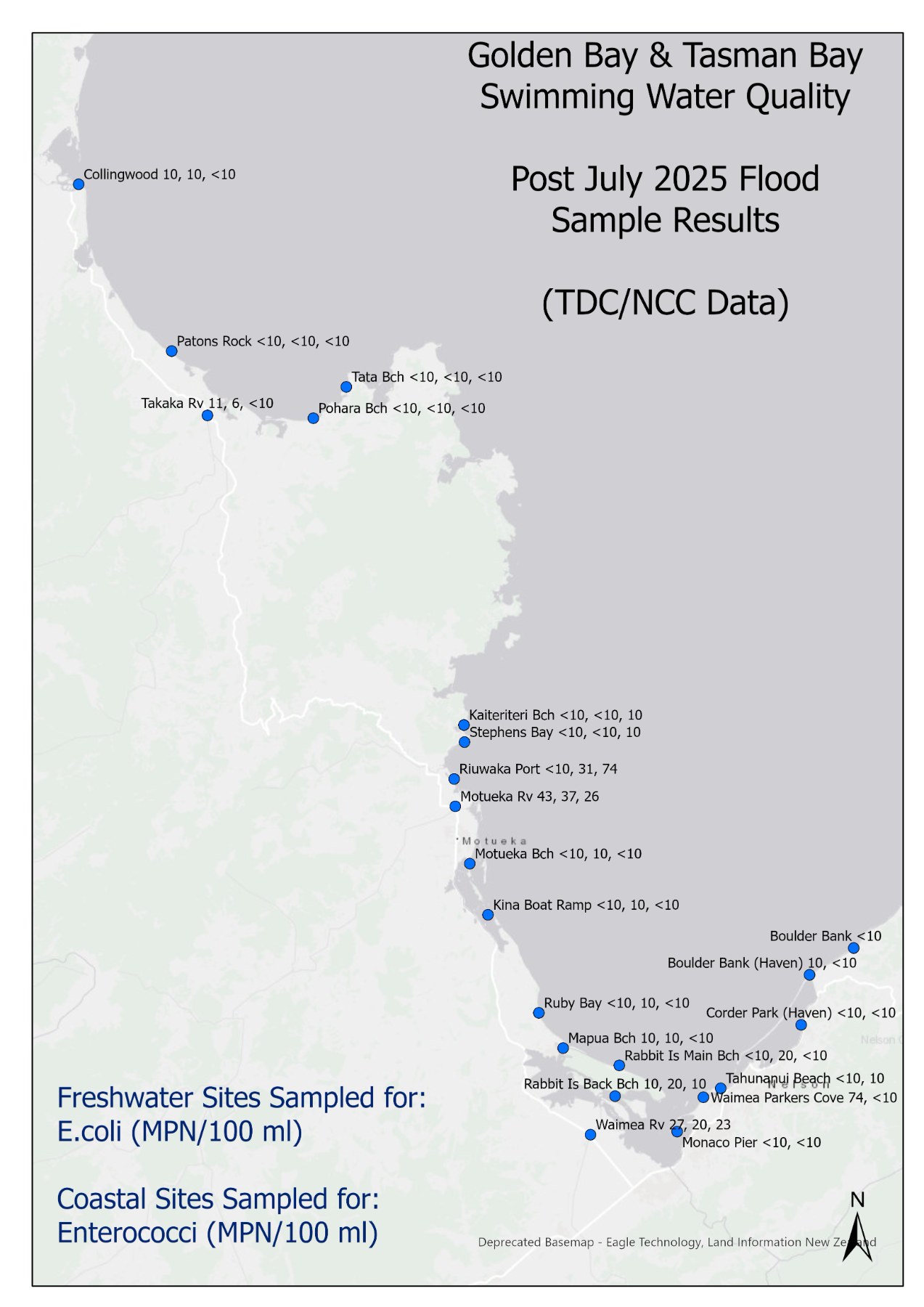
A rāhui is a vital precaution to protect public health and safety, particularly while water quality remains uncertain following major flooding. Testing for bacteria such as E. coli and enterococci is being carried out at 24 different sites across Nelson and Tasman by both councils. However, meaningful testing cannot take place during heavy rainfall, and ongoing weather events have limited the window for safe sampling.
While the rāhui isn’t legally enforceable, we encourage everyone to respect it. Those who choose to ignore it do so at their own risk.
Te Whatu Ora Public Health is responsible for reviewing available information from both councils and iwi to confirm whether contact recreation and food gathering activities are safe for public participation. This decision will also take into account the wider environmental impacts and upcoming weather conditions.
Council advises that under the Nelson Resource Management Plan (NRMP), shellfish gathering is not generally recommended in the region, as most estuaries and nearshore waters often exceed Ministry of Health guidelines.
We understand that access to rivers and the sea is important for many people’s wellbeing, and we work hard to ensure it is safe to return to the water as soon as possible. In the meantime, the rāhui remains in place to protect the health of both people and te Taiao (the environment).
For updates on recreational water quality, visit the LAWA website: https://www.lawa.org.nz/