


Nelson Halo - a community predator trapping initiative
The Nelson Halo is a community‑driven predator control and habitat enhancement initiative led by Nelson Nature. It surrounds the predator‑free Brook Waimārama Sanctuary, extending predator control and restoration work into the wider landscape to create a safe haven for native wildlife.
The goal is to bring the wild back into people’s lives, enabling native birds, lizards, bats, insects, and other species to move freely beyond the Sanctuary fence into surrounding neighbourhoods, reserves, and catchments.
Why the Halo?
The Brook Waimārama Sanctuary is predator‑free — but predators remain immediately outside the fence.
Without landscape‑scale control, native species leaving the Sanctuary encounter:
- rats
- stoats
- weasels
- possums
- feral cats
The Halo expands the Sanctuary’s protective buffer, helping:
- native bird populations recover
- lizards and invertebrates survive
- urban biodiversity flourish
- the wider ecosystem become more resilient
The Halo model is used to connect people, community groups, and backyard trappers into a shared biodiversity movement.
See the Nelson Nature Halo Operational Plan and The Nelson Halo Operational Pan Review 2026

Nelson Halo Map
The Brook Waimārama Sanctuary
The Brook Waimārama Sanctuary is a 691‑hectare, pest‑free fenced sanctuary located in the Brook Valley, just a few kilometres from Nelson City Centre. It provides a safe haven for native wildlife and forms the core of long‑term wildlife restoration efforts in the Nelson region.
The Nelson Halo builds on the success of the Sanctuary by creating a pest‑reduced wildlife corridor linking the Sanctuary with the city and surrounding hinterland. The aim is to increase the number of native birds and other wildlife by providing abundant food and safer habitat beyond the Sanctuary fence. As populations grow within the Sanctuary, birds and other species naturally spread into surrounding areas, where the Halo supports safe feeding and breeding.
The core Nelson Halo extends from the city backdrop toward Richmond, covering Council reserves from Marsden Valley in the south to Sir Stanley Whitehead Park in the north, along with the parks, rivers, streams, gardens, and private land in between.
The wider Halo reaches through Atawhai and Nelson North, into the Maitai and Roding water catchments, and out to the coast.
The success of the Halo relies on collective effort and collaboration. It is supported by community trapping and restoration groups, iwi, the Department of Conservation, private landowners and residents, researchers, and Nelson City Council, all working together to restore and protect Nelson’s native wildlife.


What the Nelson Halo Does
Predator Control
- Expanding trap networks outside the Sanctuary
- Supporting community trapping groups
- Providing subsidised predator traps for backyard trappers [link]
- Assisting backyard trappers with advice and species ID
- Co‑ordinating trapping data via trap.nz
Habitat Enhancement
- Restoring native vegetation in reserves and public green spaces
- Supporting riparian restoration through Healthy Streams
- Enhancing habitat for bats, lizards, wētā, and forest birds
Monitoring & Science
- Tracking native bird numbers and distribution
- Monitoring predator catch data
- Research to refine Halo planning and priorities
Community Support & Education
- Environmental Grants for groups and landowners
- Workshops on predator control and weed management
- Advice for landowners to improve wildlife habitat
- Encouraging citizen science observations
- Supporting local bird monitoring
- Creation of trapping guide* and project template** to make it easy for individuals and groups to start trapping.
*The Nelson Halo Predator Trapping Guide helps community groups and landowners plan effective predator control projects. It outlines six key steps to ensure your trapping makes a real difference for local wildlife.
** The Nelson Halo Project Plan template can be used to develop a Project Plan specific to your project, using the guidance in the Nelson Halo project guide.
Contact nelson.nature@ncc.govt.nz if you’d like a printed copy of the guide and template.
Take up backyard Trapping
If you haven’t already, be sure to grab yourself a predator trap for your backyard. Backyard trapping is one of the most effective ways our community can help restore the mauri of our environment.
If you’re already trapping at home, encourage your neighbours — the more people trapping, the safer our environment becomes for native birds and invertebrates.
For more information on which traps to use visit our 'Animal Predator Control' page.
Or contact Nelson Nature at nelson.nature@ncc.govt.nz or visit trap.nz to find a community trapping group in your area.

Trapping and Kākā
Now that kākā have returned to the Nelson area, trapping pest animals is more important than ever. However, we also need to ensure that kākā are not accidentally caught in traps.
Other kākā reintroduction programmes around New Zealand have experienced incidents where kākā have been injured or killed in predator traps. AT220s, A24s, and possum traps can be particularly dangerous because they are mounted in trees and have larger openings.
Our local kākā are being fed apples and pears, so these should not be used as trap lures. Kākā are also attracted to peanut butter.
All possum traps, AT220s and A24s
- Do not use fruit or peanut butter as a lure in or near traps.
- Use cinnamon-flavoured lure where possible, as it helps deter birds.
- Mount traps at least 1 metre above the ground so kākā cannot reach them from the ground.
- Fix traps to a vertical tree trunk with no perches or branches directly beneath them.
AT220s
- Set AT220s to operate at night only.
- Ensure the trap receives enough light for the daylight sensor to function correctly.
- Upgrade all AT220s to the latest firmware version. Contact NZ AutoTraps at workshop@nzautotraps.com for assistance.
Other traps
- Ensure any other traps cannot be accessed by kākā. They should be housed in sturdy boxes with small entrance holes.
- Do not use tree-mounted rat traps. Use Victor traps in boxes placed on the ground instead.
- Only use Animal Welfare/SPCA-approved and recommended traps such as Sentinel, SetnForget, Warrior, Trapinator, and Flipping Timmy.
- Do not use Timms traps, Possum Master traps, or Steve Allan Possum traps.
Thank you for helping keep Nelson's kākā safe.
For further information, contact info@brooksanctuary.org.nz.
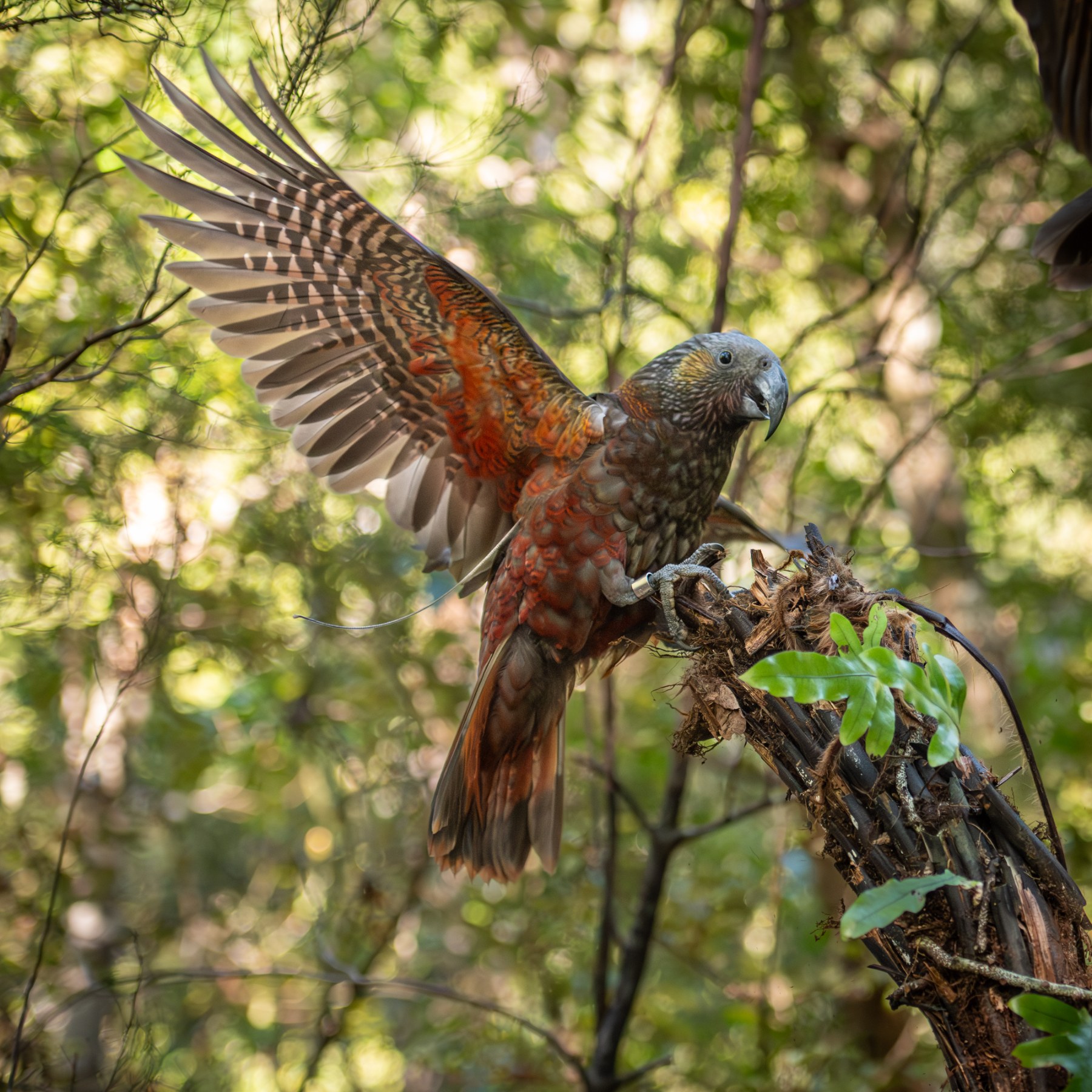
Photo: P. Cochrane @ Brook Waimārama Sanctuary
What You Can Do
- Trap your backyard for rats, stoats, and possums
- Join a local trapping or restoration group
- Remove invasive weeds (old man’s beard, banana passionfruit, climbing asparagus)
- Keep cats inside at night
- Keep dogs on leads where wildlife (weka, shorebirds) are present
- Report wildlife sightings on iNaturalist
- Participate in the NZ Garden Bird Survey
- Plant native trees to provide bird feeding habitat
- Build a wētā hotel or lizard shelter with rocks and dense shrubs
Every backyard and every trap strengthens the Halo.
Resources
- The Nelson Halo Operational Plan Review 2026
- The Nelson Nature Halo Operational Plan
- Nelson Halo Project Plan template
- Nelson Halo Predator Trapping Guide
- Contact nelson.nature@ncc.govt.nz if you’d like a printed copy of the guide and template.
- Attract Native Birds to your Garden
